The Temple of Roma and Augustus
One of the first construction activities in the transformation of the city, the homeland of the Tectosages, into the administrative center of a Roman province was the Temple of Rome and Augustus.
The Temple of Roma and Augustus
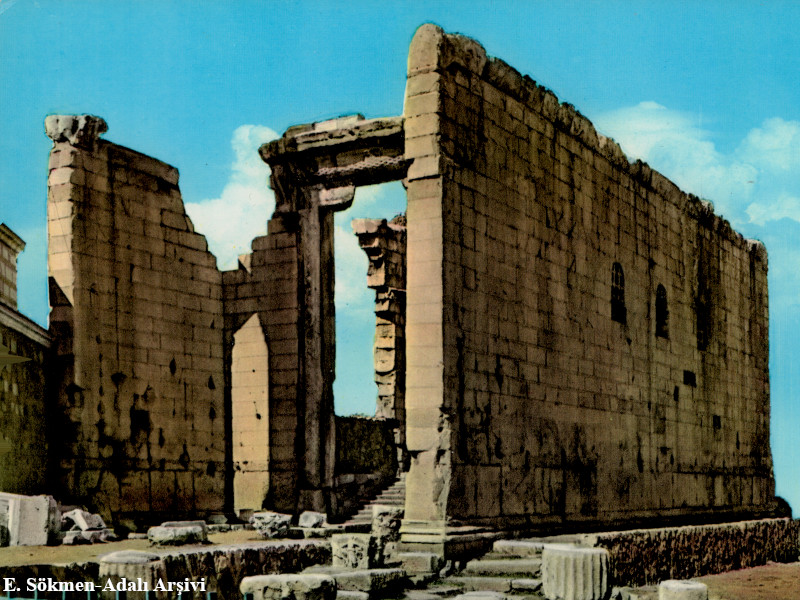
One of the first construction activities in the transformation of Ankyra, the homeland of the Tectosages, into the administrative center of a Roman province was the Temple of Rome and Augustus. Although various arguments exist regarding the construction process of the temple, the current approach suggests that it was built during the reign of Augustus (Görkay and Mitchell, 2011, 91-92).
The Romans' spatial planning practice was heavily laden with propaganda. From this perspective, the construction of a temple dedicated to the first emperor on this elevated site, which housed the oldest places of worship (Phrygian and Galatian), was a way for the new administrative order to legitimize itself.
The influence of the Galatians on the city under Roman rule can be observed in the Temple of Augustus. The inscription on the antae wall of the temple records the Galatian elites who served the Temple, along with their deeds. This inscription can be seen as a symbol of both the province’s imperial patronage and the unity between the city's former inhabitants, the Galatians, and Rome. In other words, it expresses how the Galatian identity and Roman rule were upheld by the elites.
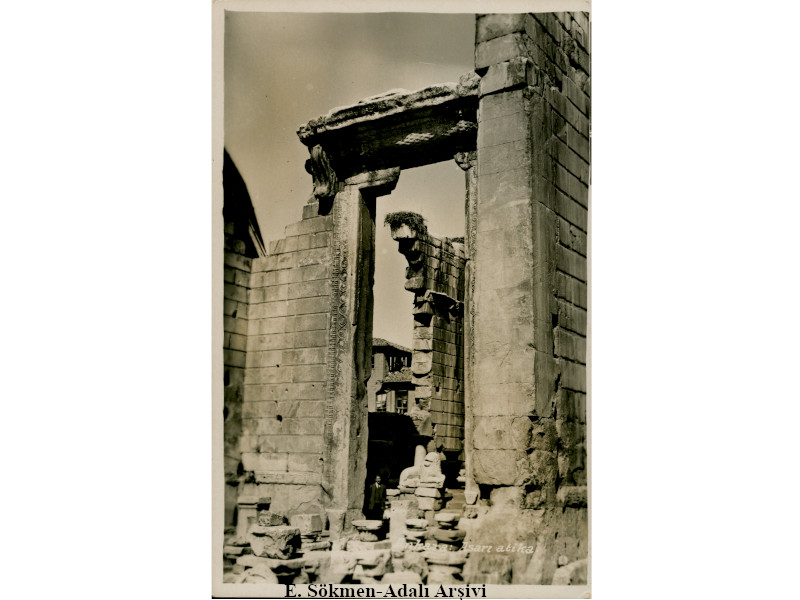
Another significant aspect that makes the temple important is the presence of an inscription, Res Gestae Divi Augusti, which conveys Augustus’ autobiography and his civil and military achievements in two languages. This inscription is located in the pronaos in Latin, the language of the empire, while its Greek translation, which does not fully correspond to the original, is inscribed on the southeastern cella wall.
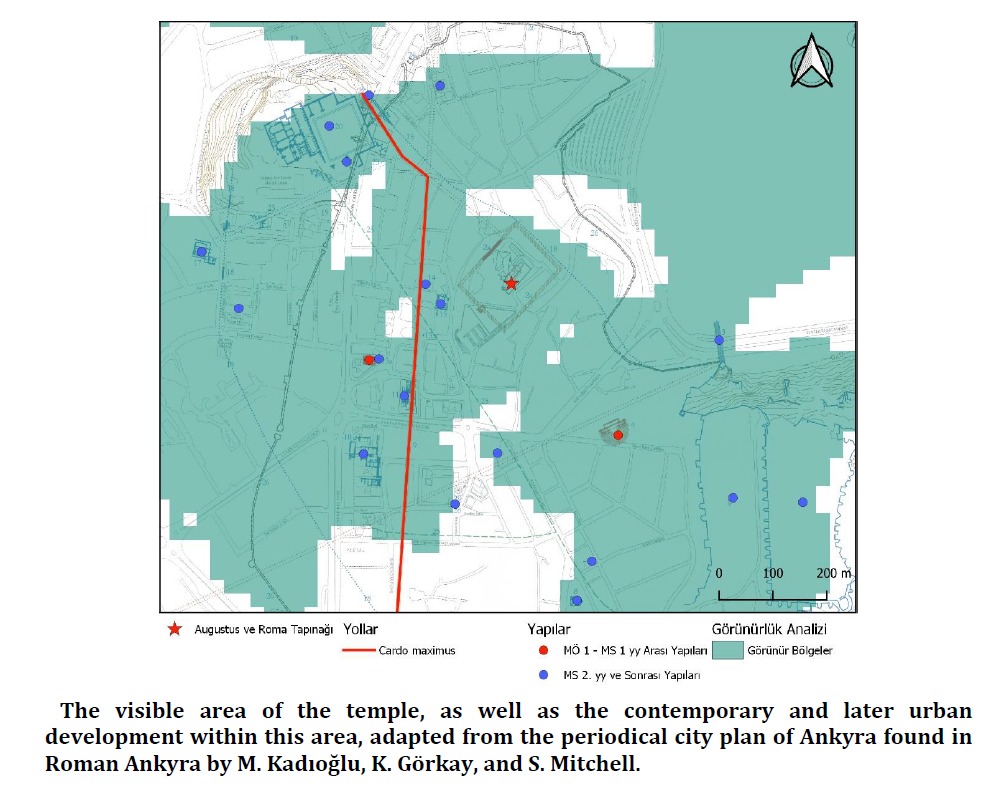
The temple was a defining structure of the city; before its construction, Ancyra had never possessed such a grand monument. This may explain why other architectural elements began to proliferate around it. The city's main arteries, its streets, were arranged in a spatially two-axial layout, with the temple situated close to the primary north-south street (cardo maximus). Additionally, it was connected to this street by a colonnaded road extending from the public buildings along the avenue.
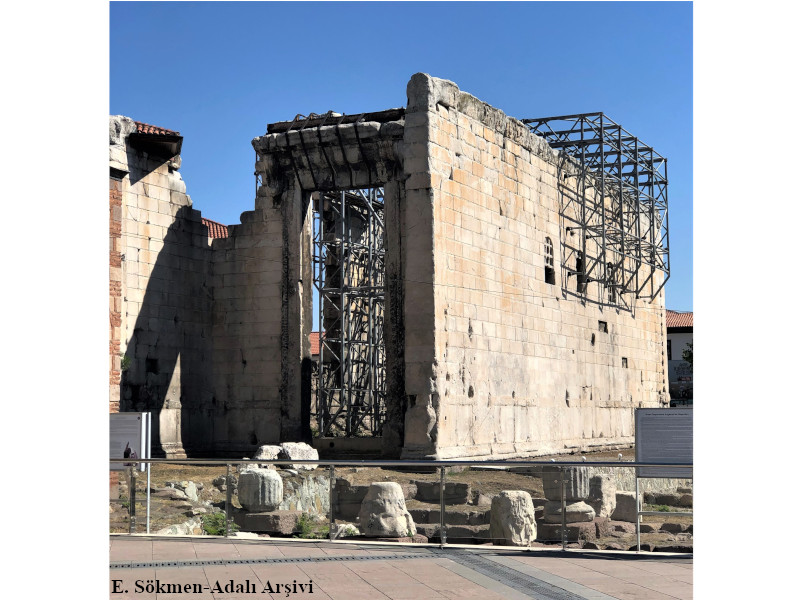
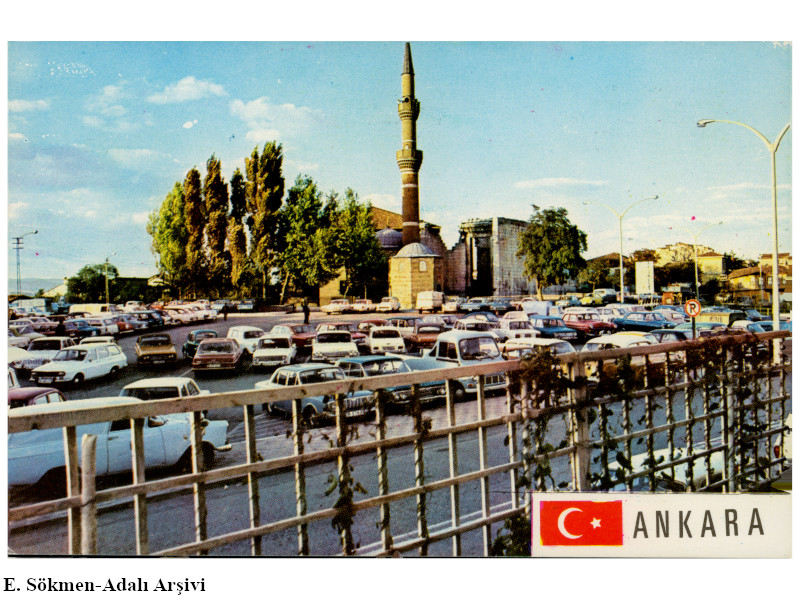
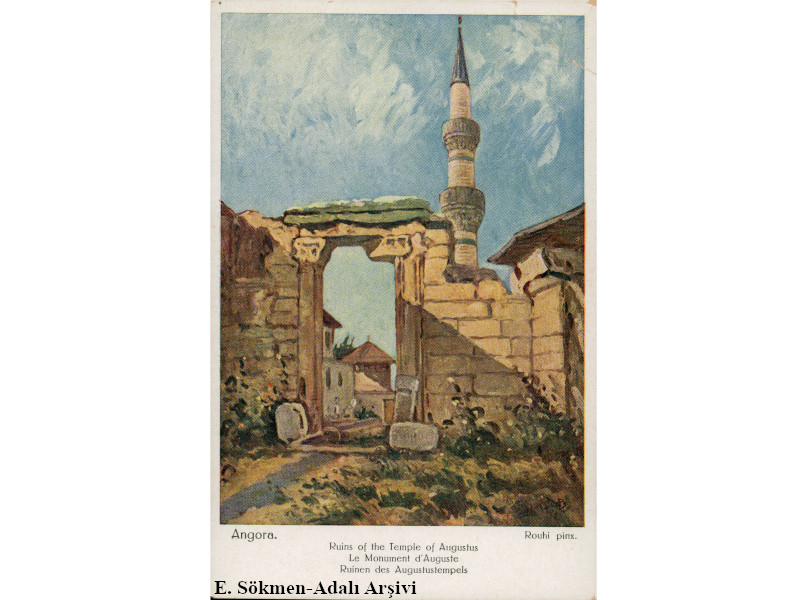
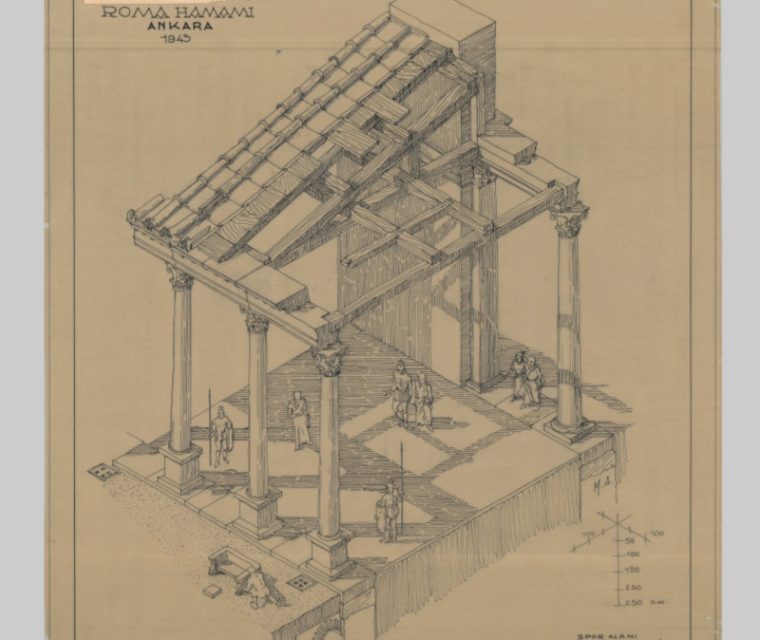
The temple later became a focal point in the planning of the Roman city that developed around it. Standing atop a hill, it rose on an eight-step crepidoma oriented in a southwest-northeast direction and was visible from many points in the city. The temple’s façade featured eight columns, while its sides had 15 columns each. The pronaos housed four columns, and at the rear, in the opisthodomos section, there were two more. Based on traces of paint still visible on the walls, it is believed that the temple was originally painted in a golden hue. Additionally, remnants of dark red paint can still be seen on some of the letters of the inscription.
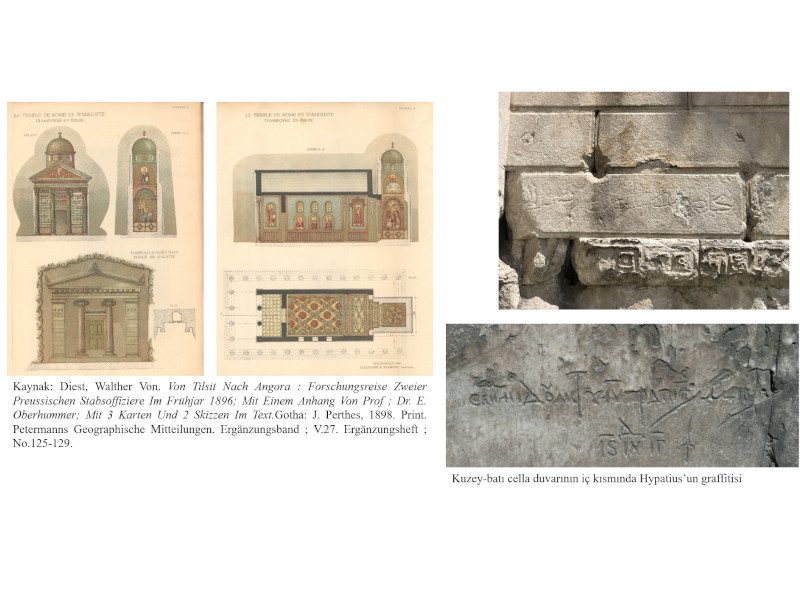
The temple was converted into a church in the 5th-6th centuries. Inscriptions and cross motifs from this period can still be seen on the walls of the structure. As part of the modifications made for its use as a church, the pronaos was preserved and likely repurposed as a narthex (Serin, 2018: 344). The floor of the cella was removed and lowered to match the level of the pronaos. Three windows were added to the southern wall of the cella during this period. There is ongoing debate regarding the dating of a structure back of the temple, which may have served as the church’s apse, replacing the opisthodomos (Mitchell-Görkay, 2011: 95; Serin, 2018: 345-347).
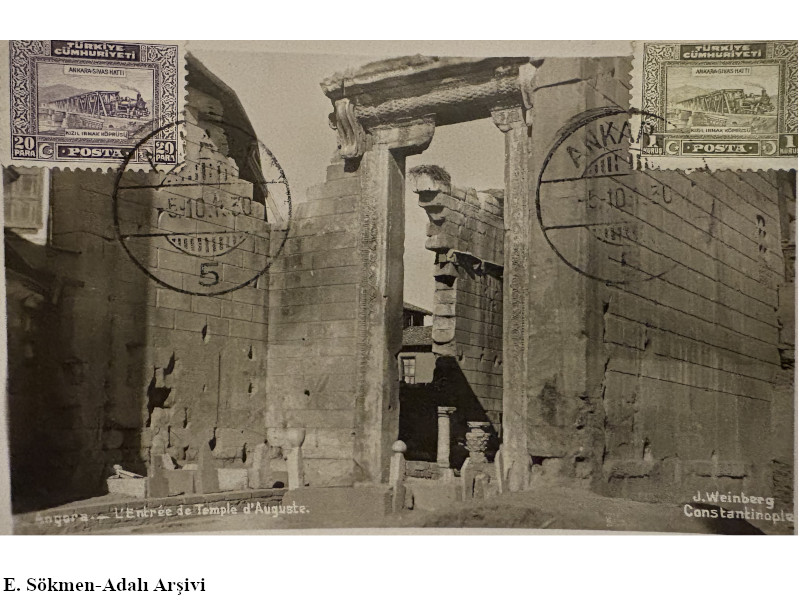
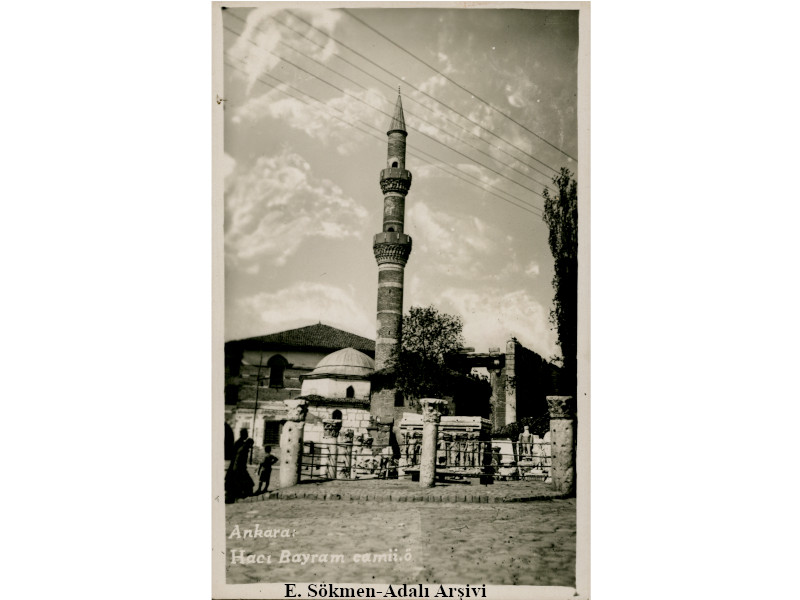
During the Ottoman period, the structure was known as Ak Medrese. Although there is no definitive information about its founder, its name does not appear in the tahrir records from the reign of Mehmed II. However, it is recorded in Tacü’t-tevarih that Çorlulu Ali Efendi taught at this medrese during the reign of Bayezid II. Therefore, it must have begun functioning sometime between these two periods (Ergenç, 1980: 99). By 1523, the Ak Medrese foundation was listed in the tahrirs with an annual income record (Kılcı, 2016: 120). Hans Dernschwam, who traveled with Ogier Ghiselin de Busbecq, reported in 1555 that the temple’s superstructure was no longer standing, and that ten mudbrick rooms had been built adjacent to the cella wall to accommodate scholars (1992: 256).
In the late Ottoman period, as the revenues of the foundation declined, the structure was left to deteriorate. It is recorded that a few meters of the northwest cella wall, the side closest to the mosque, were demolished by the foundation administration to reuse the stones. Concerns were quickly raised about twelve architectural blocks from this collapsed section being repurposed for the fountain being constructed in front of the tomb of Hacı Bayrâm-ı Velî, prompting swift intervention by the authorities. Additionally, the municipal administration was informed that a wall was built to block passage through the opening created by the demolished section (BOA, BEO.27/1996) (Sökmen Adalı, 2022: 183). During the early years of the Republic, the temple functioned as an open-air museum. Today, however, it struggles to survive.
Giovanni Leonardi and the Protection of the Temple of Roma and Augustus
During the second half of the 19th century, one name frequently appears in the process of copying the inscription and in the travel notes of visitors to Ankara: the pharmacist Giovanni Leonardi of Ankara. When it comes to ancient monuments and inscriptions in and around Ankara, Leonardi emerges both as a copyist of inscriptions and as a valuable source of information on antiquities.
An examination of Ottoman archival documents reveals that Giovanni Leonardi served as a guarding officer. In 1873, correspondence between the Ankara Province and the Grand Vizierate concerning the protection of antiquities, particularly the Temple of Roma and Augustus, indicates that he was officially authorized for this role. A letter dated December 5, 1873, sent from the Grand Vizierate to the Ankara Province, refers to a previous communication dated August 29, 1873, instructing that Giovanni Leonardi should continue overseeing the preservation of the structure containing Res Gestae and be provided with necessary assistance when required.
This authorization was renewed and extended on July 17-18, 1874. Within the scope of his duties, Giovanni Leonardi submitted detailed reports to the Grand Vizierate, emphasizing the significance of the Temple of Roma and Augustus as the repository of Augustus’ testament. Through the expert assessments he prepared, he documented the temple’s condition, thereby contributing to the awareness and preservation efforts for the monument within the Ottoman administrative framework.
References
BOTTERI, P., V. VERONESI, S. RAVALICO. 2018. Progetto Ancyra. Il tempio di Augusto e Roma ad Ankara, Edizioni Università di Trieste, Trieste.
COOLEY, A. E. (2009) Res Gestae Divi Augusti: Text, Translation, and Commentary, Cambridge.
COŞKUN, A. (2012) Intercultural Anthroponomy in Hellenistic and Roman Galatia, Gephyra (9) 51-68.
COŞKUN, A. (2014) Neue Forschungen zum Kaiserkult in Galatien. Edition der Priester-Inschriften des Ankyraner Sebasteions (OGIS 533 = Bosch 51) und Revision der Frühen Provinzialgeschichte, Der Beitrag Kleinasiens zur Kultur- und Geistesgeschichte der griechisch-römischen Antike, Akten des Internationalen Kolloquiums, Wien, 3 –5 November 2010, ed. J. Fischer, Verlag der Österreichischen Akademie der Wissenschaften. Wien; 35-73.
COŞKUN, A. (2021) Galat Krallıkları, Hellenistik ve Roma Dönemlerinde Anadolu: Krallar, İmparatorlar, Kent Devletleri, der. O. Tekin, Yapı Kredi Yayınları, İstanbul; 124-143.
CUNLIFFE, B. (2018) The Ancient Celts. Second Edition, Oxford University Press, UK
DARBYSHIRE, G., MITCHELL, S., VARDAR, L. (2000) The Galatian Settlement in Asia Minor, Anatolian Studies (50) 75-97.
DERNSCHWAM, H. (1992) İstanbul ve Anadolu’ya Seyahat Günlüğü, Çev. Y. Önen, Kültür Bakanlığı Yayınları 885, Dünya Edebiyatı Dizisi 5, Mersin.
ERGENÇ, Ö. (1980) XVII. Yüzyılın Başlarında Ankara’nın Yerleşim Durumu Üzerine Bazı Bilgiler, Osmanlı Araştırmaları I, 79-108.
GÖRKAY, K., MITCHELL, S. (2011) Augustus ve Roma Tapınağı, Roma Dönemi’nde Ankyra, der. M. Kadıoğlu, K. Görkay, S. Mitchell, Yapı Kredi Yayınları, Ankara; 79-98.
GÜVEN, S. (1994) Res Gestae Divi Augusti Yazıtı ve Ankara’nın Roma Dünyasındaki Yeri, Ankara Ankara, der. E. Batur, Yapı Kredi Yayınları, İstanbul; 51-61.
GÜVEN, S. (1998) Displaying the Res Gestae of Augustus: A Monument of Imperial Image for All, Journal of the Architectural Historians (57/1) 30-45.
GÜVEN, S. (2019). Monumentum Ancyranum Yazının Anıtı/Mimarlığın Yazısı, İnci Aslanoğlu için Bir Mimarlık Tarihi Dizimi, der. T. Elvan Altan, Sevil Enginsoy Ekinci, Ankara: Kalkan Yayıncılık, 1-5.
KADIOĞLU, M., GÖRKAY, K. (2011) Kent Planı Gelişimi, Roma Dönemi’nde Ankyra, der. M. Kadıoğlu, K. Görkay, S. Mitchell, Yapı Kredi Yayınları, İstanbul; 243-252.
KILCI, A. (2016) Haci Bayram-ı Velî Döneminden Ankara’da Ak Medrese ve Kara Medrese, der. A. C. Haksever, Uluslaraarası Hacı Bayram-ı Veli Sempozyumu Bildiriler Kitabı 1, Ankara; 115-144.
KOŞAY, H. Z. (1939) Haberler- Ankara Mabedindeki Hafriyat 1939, Belleten 3, Sayı 11-12, s. 463.
KOŞAY, H. Z. (1957) Ankara Augustus Mabedi Kazısı, Augustustempel in Ankara, Anadolu/ Anatolia II, 133-135.
KRENCKER, D., SCHEDE, M., (1936) Der Tempel in Ankara, (Archaologisches Institut des Deutschen Reiches, Denkmaler Antiker Architektur, Band 3).
MITCHELL, S., FRENCH, D. (2012) The Greek and Latin Inscriptions of Ankara (Ancyra). Vol I: From Augustus to the end of the third Century AD, Munchen 2012.
SCHEDE, M. (1926). “Photographische Aufnahmen vom Monumentum Ancyranum” AA 1926: 465-466.
SERIN, U. (2018) Ankara and the Temple of Rome and Augustus in the Late Antique, Byzantine and Turkish Periods, eds. P. Botteri, V. Veronesi, S. Ravalico, Progetto Ancyra. Il tempio di Augusto e Roma ad Ankara, Edizioni Università di Trieste, Trieste; 335-377.
SERİN, U. (2020). Augustus ve Roma Tapınağı Kazı Çalışmaları, İçinde, Kozak, N. (Editör), Online Türkiye Turizm Ansiklopedisi, https://turkiyeturizmansiklopedisi.com/augustus-ve-roma-tapinagi-kazi-calismalari (Erişim tarihi: 23.02.2025).
SÖKMEN ADALI, E. (2022) Geç Osmanlı Dönemi Resmî Yazışmalarında Ankara Augustus Tapınağı, Arkeoloji ve Sanat 171, 181-187.
SÖKMEN ADALI, E., (2022), “Ankara Roma ve Augustus Tapınağı’nı Korumaya Memur Edilmiş Eczacı Giovannı Leonardi’nin Res Gestae Çevirisi", Arkeoloji ve Sanat, (170) 159-178.
SÖKMEN ADALI, E., (2023) "İmparatorluk İmgesi Olarak Politik Peyzajda Ankyra Roma ve Augustus Tapınağı", SPLANDES, Sekizgen Academy 3.
Share on