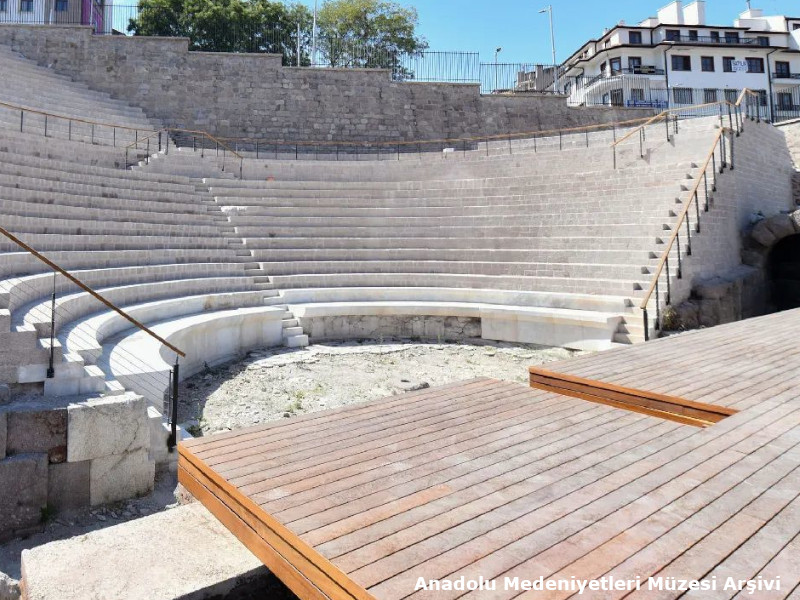
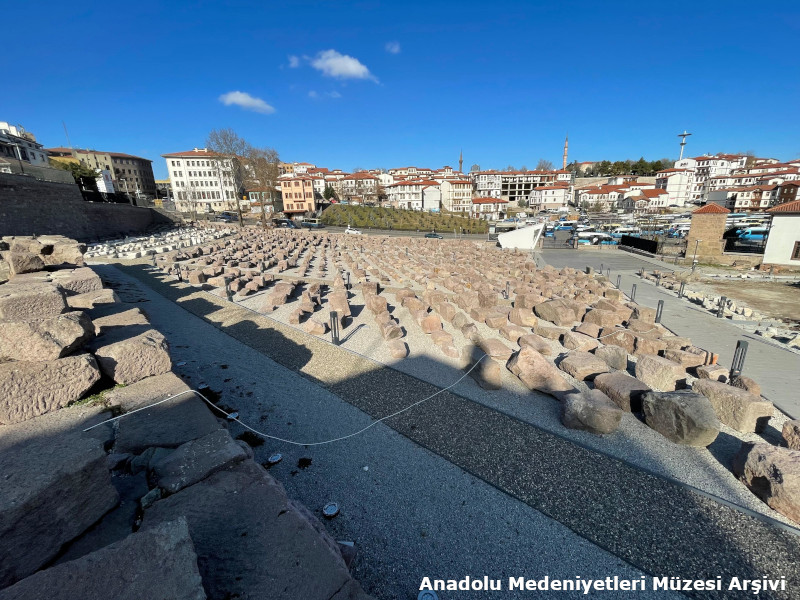
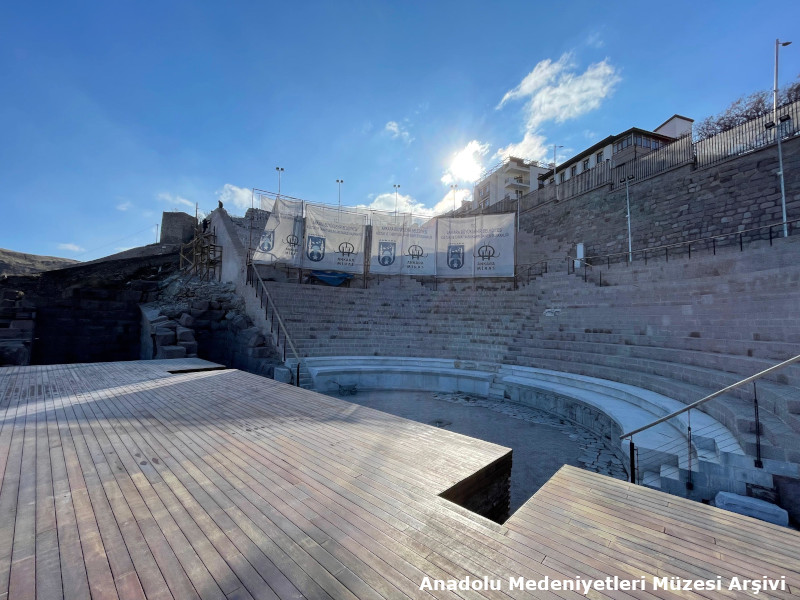
The Roman Theater is located southeast of the Temple of Augustus and Rome, on the northwestern slope of Ankara Castle, overlooking Bent Deresi. The theater occupies a strategically significant point within the urban layout of Ankyra. This location allows the structure to benefit from both topographical and climatic advantages.
When compared with Vitruvius' principles of theater construction, the 23° northwest orientation of the theater appears to optimize airflow from the valley, enhancing both acoustics and audience comfort. The construction of the theater on a natural slope, a common practice in ancient Roman architecture, facilitated the formation of a natural tribune incline, reducing the need for extensive substructures. While the general plan of the Ankyra Theater adheres to the Roman theater tradition, it also incorporates distinctive Anatolian elements.
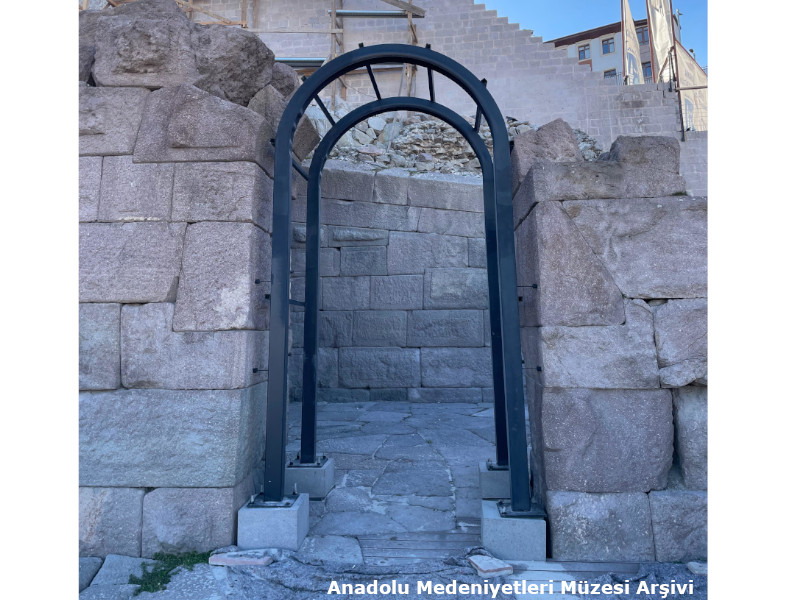
The D-shaped cavea, merging with the scaenae frons to create a semi-enclosed structure, bears resemblance to the theaters of Aspendos and Xanthos. The presence of five doors in the stage building, deviating from the standard layout of typical Roman theaters, is considered a characteristic feature of Anatolian theaters.
There are various scholarly perspectives regarding the construction date of the Ankyra Theater. It is believed to have been built in the early 1st century AD, with renovations undertaken during the Hadrianic period. The conversion of the orchestra into a water basin in the 3rd century AD indicates that the structure remained in use throughout the Roman Imperial period. Beyond serving as a venue for theatrical performances, the theater also functioned as a center for Aktia games and other festival celebrations, dating back to the Augustan period. The Pythian games organized during the reign of Caracalla and the Mystic games celebrated under Hadrian further demonstrate the theater’s significant role in the cultural life of the Roman Empire.
References
Kadıoğlu, M. (2011) Tiyatro, içinde: Roma Dönemi’nde Ankyra, der. M. Kadıoğlu, K. Görkay, S. Mitchell, Yapı Kredi Yayınları, İstanbul; 117-133.
Uzunarslan, A. (2021) Roma İmparatorluk Dönemi’nde Ankyra’da Agonistik Festivaller, Asırlık Çınar Anadolu Medeniyetleri Müzesi 100 Yaşında, der. Y. Kıraç, U. Alagöz, Z. F. Taşkıran, A. Alpagut, Ankara; 315-342.