Skip links

Res Gestae Divi Augusti

Res Gestae Divi Augusti

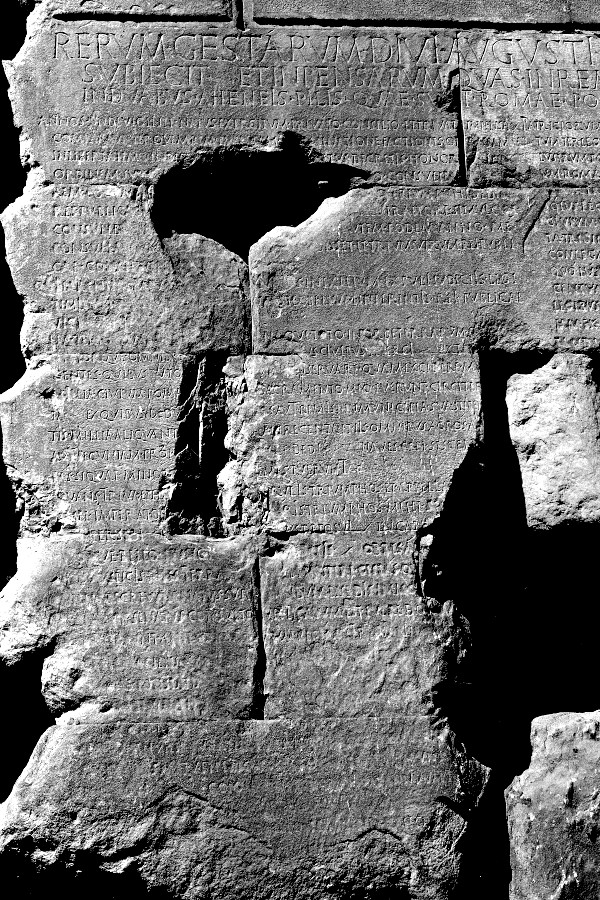
Ancyra, the capital of the Roman province of Galatia, has preserved an invaluable historical document through its temple dedicated to the first emperor and the goddess Roma. The Res Gestae Divi Augusti inscription (RGDA) of the Temple of Rome and Augustus in Ankara is considered one of the most significant written records in Roman and Ancient History, as it represents the best-preserved example of the autobiography of the first Roman emperor, Augustus.

Translations of the Inscription

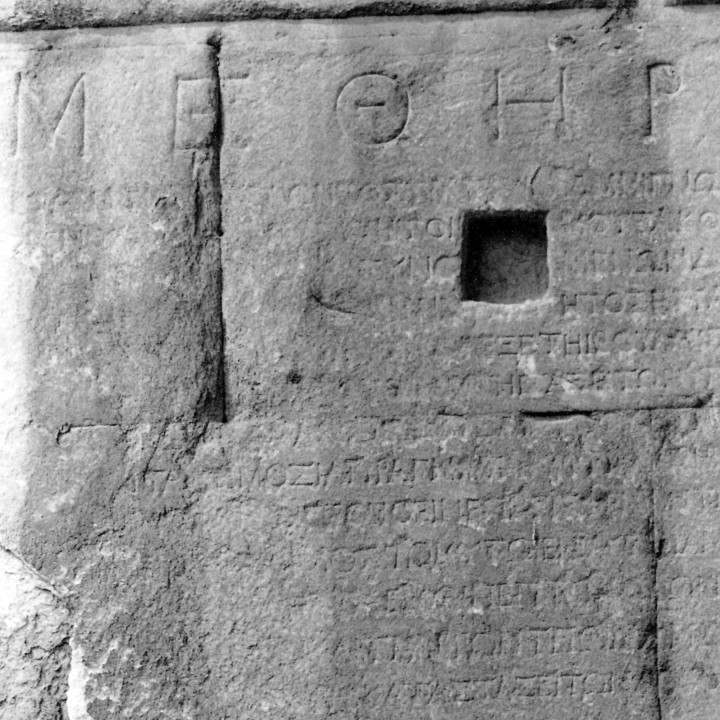
The Greek version of the inscription is located on the southeastern façade of the temple. During the Ottoman period, it was preserved as it remained within the interior of houses built adjacent to this wall. However, it was also partially damaged due to the recesses where the ceiling beams of these houses were embedded. The inscription consists of 35 sections and 1 appendix, engraved in 19 columns. The English translation presented here is shared with the permission of Professor Dr. Alison E. Cooley. (A. E. Cooley. 2009. Res Gestae Divi Augusti, Text, Translation, and Commentary, Cambridge University Press.) The Turkish translation is included here with the permission of Professor Dr. Turhan Kaçar.

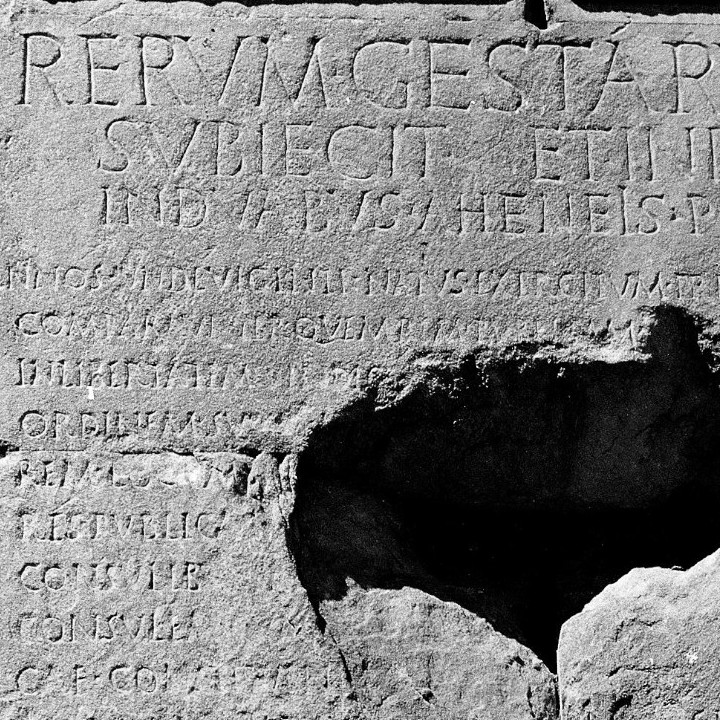
The Res Gestae Divi Augusti is inscribed in two languages on the walls of the temple. This text, which details Augustus' military victories, the monuments he commissioned, the services he provided to the Roman people, and the reforms he implemented throughout his political career, is found in Latin in the pronaos of the temple.

The Ottoman Turkish translation was produced by Giovanni Leonardi, a pharmacist from Ankara, based on the Latin text. This document was submitted by Leonardi to the Grand Vizier’s Office in 1873 as part of a report, following official correspondence emphasizing the necessity of preserving the temple.

Res Gestae Divi Augusti Greek

Res Gestae Divi Augusti Latin

Giovanni Leonardi’s Translation of Res Gestae

An individual from Ankara also took part in the effort to copy the inscription: Giovanni Leonardi. A pharmacist from Ankara, Leonardi was entrusted with the preservation of the Temple of Rome and Augustus. Not only did he assist those attempting to copy the inscription, but he also submitted a detailed report to Ottoman authorities regarding both the temple and the significance of the inscription it bore. This report included a translation of Res Gestae. Official correspondence indicates that Leonardi dedicated approximately 30 years to the documentation of the inscription. In his report, he acknowledged that his Ottoman Turkish translation did not fully correspond to the Latin inscription in certain places, emphasizing the challenges in understanding some sections of the text. It appears that, following the earlier copying attempts by Texier and Hamilton, Leonardi also made his own effort to create a copy of the inscription. For detailed information on the history of the inscription’s copying, please visit this site:

This website uses cookies to improve your web experience.